Receive the latest reviewed off-market opportunities across cars, homes, yachts and private jets, delivered privately to your inbox.
Thank you. You'll receive the latest reviewed off-market opportunities from HYPERLUXE, delivered privately to your inbox.
By subscribing, you agree to HYPERLUXE's Privacy Policy. You can unsubscribe at any time via the link in any email.
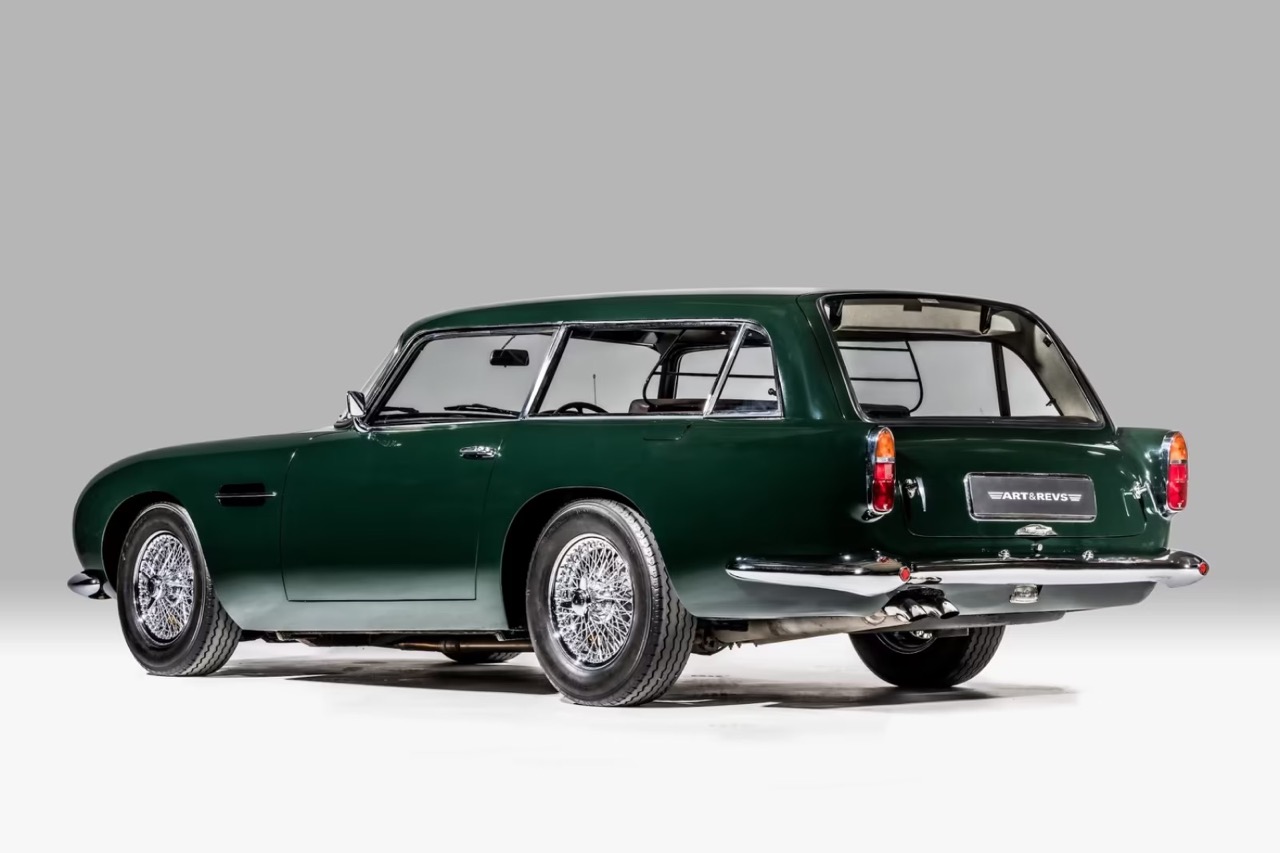
The Aston Martin DB5 Shooting Brake by Harold Radford is one of the rarest coachbuilt Aston Martins of the 1960s. Based on the DB5 Saloon and converted by Harold Radford Coachbuilders Ltd, the Shooting Brake transformed Aston Martin's celebrated grand tourer into what Radford described as "the world's fastest dual-purpose vehicle". Only 12 examples are commonly recorded, making it the rarest DB5 body variant and one of the most closely scrutinised models in the classic Aston Martin market.
For buyers researching an Aston Martin DB5 Shooting Brake for sale, value depends less on generic DB5 specifications and more on documented Radford provenance, chassis identity, matching-number status, restoration history, steering configuration, seller authority and the quality of the private dossier available before acquisition.
The Aston Martin DB5 Shooting Brake by Harold Radford is one of the rarest and most unusual DB5 derivatives ever built. Unlike a standard DB5 Saloon, the Shooting Brake was not a normal series-production body style. It originated from a special conversion commissioned for David Brown, then owner of Aston Martin, who wanted a more practical DB5 for his dog and sporting equipment. Further cars were then converted by Harold Radford & Sons, the British coachbuilder known for bespoke luxury conversions. Most reputable market references describe the DB5 Shooting Brake as a 12-car coachbuilt series, with 8 right-hand-drive and 4 left-hand-drive examples commonly cited.
These cars are often described as "factory shooting brakes", but they were not built as a normal Aston Martin production body style in the same way as the DB5 Saloon or Convertible. The more precise description is: Aston Martin DB5 Shooting Brake by Harold Radford, one of approximately 12 coachbuilt examples, converted with Aston Martin approval or commissioning depending on the car.
General Information
| Model | Aston Martin DB5 Shooting Brake |
| Coachbuilder | Harold Radford & Sons |
| Base model | Aston Martin DB5 Saloon |
| Production period | Mid-1960s |
| Estimated production | 12 examples commonly cited |
| RHD examples | 8 examples commonly cited |
| LHD examples | 4 examples commonly cited |
| Body style | 2-door shooting brake / estate conversion |
| Layout | Front-engine, rear-wheel drive |
Engine & Performance
| Engine | 4.0-litre inline-six, 3,995 cc |
| Standard DB5 power | Approx. 282 bhp |
| Vantage engine output | Approx. 314–325 bhp, depending on source and specification |
| Carburettors | Triple SU on standard DB5; triple Weber on Vantage-spec cars |
| Top speed | ~150 mph (claimed by Radford) |
Transmission & Chassis
| Transmission | 5-speed ZF manual or optional automatic, depending on original car |
| Chassis | Steel platform chassis with aluminium body panels |
| Front suspension | Independent front suspension |
| Rear suspension | Live rear axle |
| Brakes | Girling disc brakes |
| Steering | Rack-and-pinion |
| Wheelbase | 98 inches |
Coachwork & Design
| Conversion scope | Extended roofline, rear tailgate, increased luggage capacity, practical rear compartment |
| Character | Bespoke gentleman's sporting estate, not a conventional station wagon |
| Body panels | Aluminium (hand-formed by Radford) |
| Standard DB5 production | Around 1,021–1,059 cars depending on reference methodology |
| DB5 Convertible production | 123 examples commonly cited |
Market Context & Comparables
| Market category | Coachbuilt classic Aston Martin |
| Main comparable models | DB5 Saloon, DB5 Convertible, DB5 Vantage, DB6 Shooting Brake, DB4 GT, DB5 Goldfinger Continuation |
| Auction reference | 1965 DB5 Shooting Brake by Radford, chassis DB5/2273/L, sold by RM Sotheby's Monterey for $1,765,000 in 2019 (one of four LHD examples) |
| Upcoming reference | 1966 DB5 Shooting Brake by Radford, chassis DB5/2014/R (one of eight RHD, matching-numbers engine, long-term family ownership), RM Sotheby's |
| Current HYPERLUXE count | 1 private DB5 Shooting Brake opportunity |
| Asking price | €950,000 for the represented example |
Original Price
| Standard DB5 Saloon | Around £4,412 in period |
| Radford conversion cost | Around £2,000 additional |
| Total new price | Approx. £6,400, far more expensive than a standard DB5 |
| Price note | Original price is historical context only. Modern value is driven by provenance, rarity, restoration quality, originality and buyer confidence |
The most widely repeated figure for the Aston Martin DB5 Shooting Brake is 12 examples converted by Harold Radford. RM Sotheby's describes specific cars as "one of 12 factory DB5 shooting brakes", while Aston Martin-focused archives also cite 12 cars, usually split between 8 right-hand-drive and 4 left-hand-drive examples.
That wording needs care. These cars are often described as factory shooting brakes, but they were not built as a normal Aston Martin production body style in the same way as the DB5 Saloon or Convertible. The DB5 Convertible is commonly cited at 123 examples, making the Shooting Brake roughly ten times rarer.
The DB5 Shooting Brake is based on the Aston Martin DB5 and generally uses the DB5's 3,995 cc inline-six engine. Standard DB5 output is commonly listed at around 282 bhp, while Vantage-specification cars received a higher-output engine, usually associated with triple Weber carburettors and output often cited around 314–325 bhp depending on the reference and exact configuration.
For a specific car for sale, the engine specification must be verified car by car. Some DB5 Shooting Brakes were built or later presented as DB5 Vantage Shooting Brakes, while others are standard-engine cars. A buyer should not assume that every DB5 Shooting Brake is a Vantage.
The DB5 was offered with a 5-speed ZF manual gearbox, while some cars were fitted with automatic transmission. Because the Shooting Brake cars began life as DB5 Saloons before conversion, transmission depends on the original chassis and any later restoration or mechanical changes. For a car listed for sale, the correct gearbox, matching-number status and any mechanical upgrades should be confirmed from the build sheet, factory records, BMIHT certificate, restoration invoices and specialist inspection.
The Aston Martin DB5 Shooting Brake sits above a standard DB5 Saloon in rarity and coachbuilt significance, but its market is narrower than the DB5 coupé market because the body style is highly specific. It appeals to collectors who understand Radford, British coachbuilding and the difference between factory production and bespoke conversion.
A useful public auction reference is the 1965 Aston Martin DB5 Shooting Brake by Radford, chassis DB5/2273/L, sold by RM Sotheby's in Monterey for $1,765,000 in 2019, described as one of 12 factory DB5 shooting brakes and one of only four left-hand-drive examples. Another reference describes a 1966 DB5 Shooting Brake by Radford, chassis DB5/2014/R, as one of eight right-hand-drive examples, with matching-numbers engine and long-term family ownership.
| Value driver: why it matters | |
| Radford documentation | Confirms the conversion's authenticity |
| Chassis number | Establishes identity and DB5 origin |
| Matching-numbers engine | Major value factor for classic Aston Martins |
| LHD or RHD | LHD cars are commonly cited as only 4 examples |
| Vantage specification | Can materially affect desirability |
| Original colour | Important if the car retains or has returned to factory colours |
| Ownership history | Long-term ownership and low-owner history support provenance |
| Restoration quality | Specialist restoration records matter heavily |
| History file | Invoices, certificates, photos and correspondence strengthen confidence |
| Market availability | These cars rarely appear publicly |
| Seller authority | Essential because rare Astons often circulate through broker chains |
| Tax and registration status | Critical for international buyers |
| Acquisition detail: required verification | |
| Chassis number | Confirmed against factory and specialist records |
| Engine number | Matching-number verification |
| Radford conversion history | Documentation proving original conversion |
| Body style authenticity | Confirmation that it is not a later recreation |
| Vantage status | Factory Vantage, upgraded later, or standard engine |
| Transmission | Manual or automatic, original or changed |
| Steering position | LHD or RHD |
| Original colour | Factory build sheet and restoration records |
| Current colour | Paint history and restoration documentation |
| Ownership history | Previous owners, countries, long-term custody |
| Restoration invoices | Specialist invoices and photographic records |
| Certificates | BMIHT, Aston Martin Heritage Trust or marque specialist documentation |
| Import status | Duties, VAT, registration and export documents |
| Seller authority | Owner, dealer, direct broker or representative |
FAQ
Model-level answers for buyers researching an Aston Martin DB5 Shooting Brake.
View the listing →The Aston Martin DB5 Shooting Brake by Harold Radford is commonly cited as a 12-car series, with 8 right-hand-drive and 4 left-hand-drive examples. Some references describe them as factory shooting brakes, but the more precise description is that they were DB5 cars converted by Harold Radford with Aston Martin involvement or approval depending on the car.
The DB5 Shooting Brake was converted by Harold Radford & Sons, a British coachbuilder known for bespoke luxury estate and shooting brake conversions. The first DB5 Shooting Brake was commissioned for David Brown, then owner of Aston Martin.
It depends how strictly the term "factory" is used. The DB5 Shooting Brake was not a normal Aston Martin production body style like the Saloon or Convertible. The cars were DB5s converted by Harold Radford, often described in auction catalogues as factory shooting brakes because of Aston Martin involvement or commissioning. For accuracy, "DB5 Shooting Brake by Harold Radford" is the safer wording.
Yes. The DB5 Convertible is commonly cited at 123 examples, while the DB5 Shooting Brake is commonly cited at around 12 examples. That makes the Shooting Brake one of the rarest DB5 derivatives.
Most specialist and auction references cite 4 left-hand-drive Aston Martin DB5 Shooting Brake examples. This makes LHD cars especially relevant for European, Swiss, Middle Eastern and US collectors.
The DB5 Shooting Brake is based on the DB5 and typically uses the 3,995 cc inline-six engine. Standard DB5 output is commonly listed at around 282 bhp, while Vantage-specification cars can be higher, depending on original build and later history.
No. Not every DB5 Shooting Brake is automatically a Vantage. Some cars are described as DB5 Vantage Shooting Brakes, but this must be verified using factory records, engine specification, carburettor setup, build documentation and specialist inspection.
Public auction references include a 1965 DB5 Shooting Brake by Radford sold by RM Sotheby's in Monterey for $1,765,000 in 2019. Current value depends on chassis identity, originality, matching-number status, Vantage specification, LHD/RHD configuration, restoration quality, history file and seller motivation.
A standard DB5 Saloon cost around £4,412 in period, while the Radford Shooting Brake conversion added around £2,000. Some period examples therefore cost far more than a normal DB5 when new.
It can be highly collectible, but the reasoning must be precise. Its appeal comes from DB5 status, Radford coachbuilding, tiny production numbers and provenance. However, because the Shooting Brake body style attracts a narrower buyer pool than a standard DB5 coupé, value depends heavily on documentation, condition and the specific car.
A buyer should verify the chassis number, engine number, matching-number status, Radford conversion history, original build records, Vantage specification, restoration history, ownership chain, colour history, registration status, import documents and seller authority.
Yes, many DB5 Shooting Brake opportunities are handled privately because only around 12 examples are known. Public listings are rare, and serious opportunities often require direct access to the owner, dealer or authorised broker.
The DB5 Shooting Brake was expensive, specialised and coachbuilt. Each car began as a DB5 and required a Radford conversion, making it significantly more costly and less conventional than a standard DB5. That explains why production remained extremely limited.
The standard DB5 is more recognisable and has broader market liquidity, largely because of its James Bond association. The DB5 Shooting Brake is rarer and more unusual, but also more specialist. It is best suited to collectors who value coachbuilt Aston Martins and documented rarity.
Private details such as chassis number, engine number, seller identity, ownership documents, restoration invoices and private photos are shared after buyer qualification. For a car this rare, the correct process is controlled access to verified information, not open disclosure.
HYPERLUXE · Private Request
Chassis number, Radford conversion records, ownership history, condition report, private images and seller-side contact are released by the responsible broker after buyer qualification. Submit an inquiry from the listing to start the review.
 EN
EN AR
AR ZH
ZH HI
HI RU
RU